Materials
The Enduring Beauty of Travertine
Travertine carries the memory of landscape into an interior. Its quiet tonal variation, open texture and architectural presence make it both ancient and entirely contemporary.
01
Stone with a sense of time
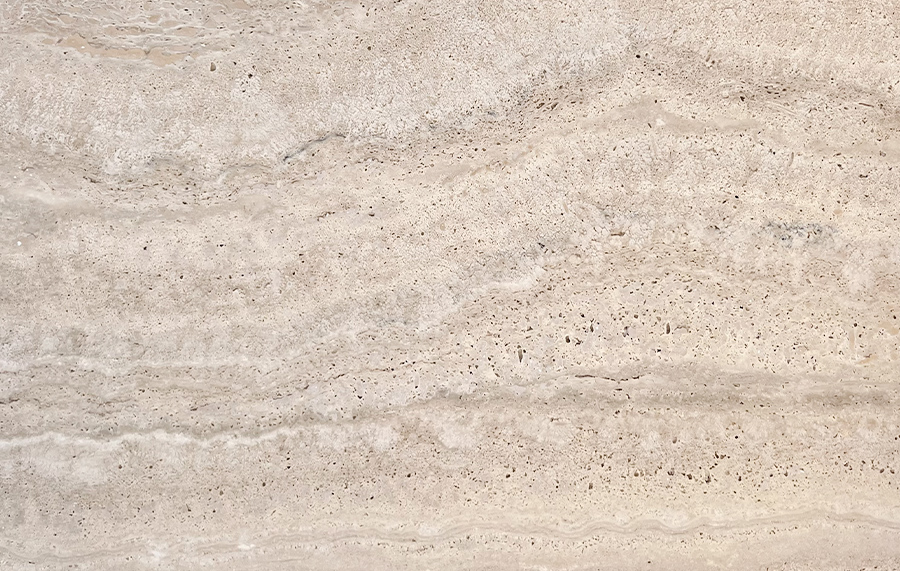
Travertine is formed slowly, layer by layer. The small cavities and linear markings that distinguish it are not imperfections but records of its geological origin.
In a room, this natural rhythm creates depth without visual noise. It can hold a space with confidence while allowing furniture, light and daily life to remain present.
“The most expressive materials do not ask for decoration. They bring their own history.”
02
A contemporary material language
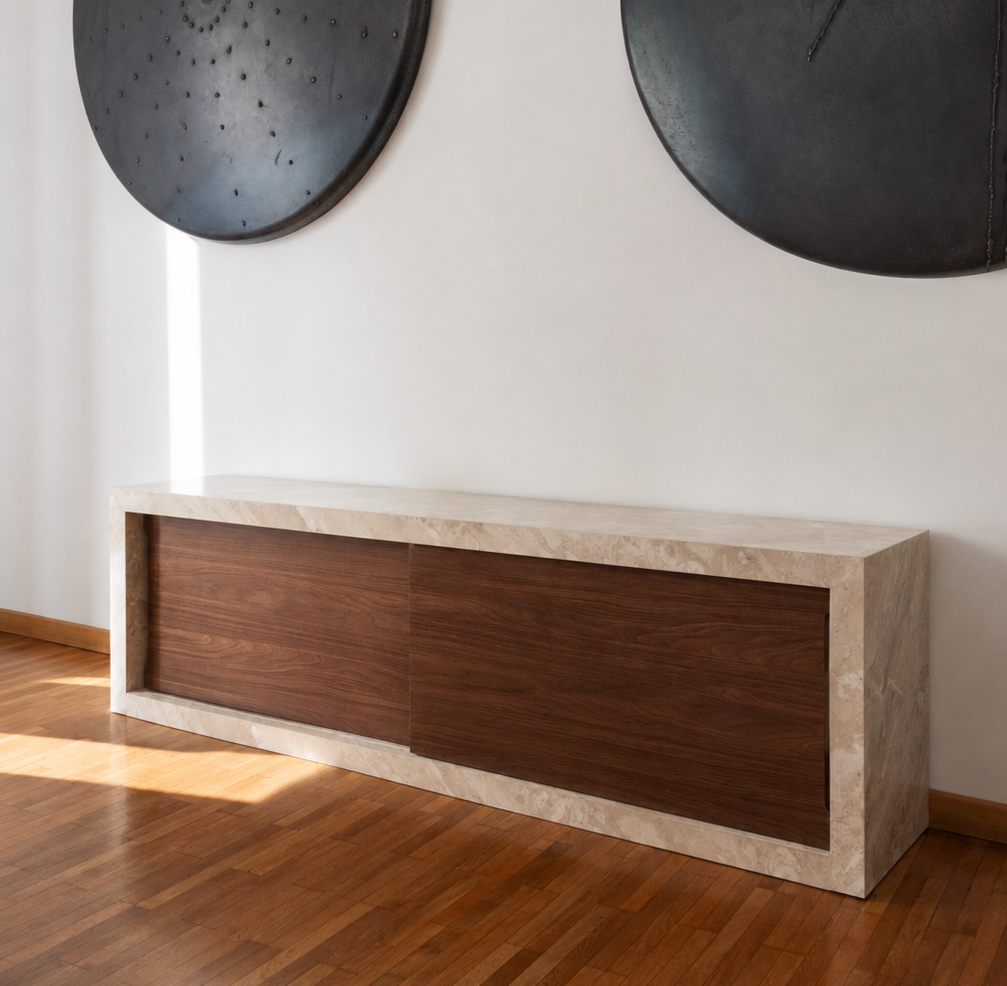
We often use travertine where warmth and architectural clarity need to coexist: for a table with a generous silhouette, a monolithic console or a continuous interior surface.
Honed finishes soften reflected light, while filled or open-pore treatments alter the tactile character. The choice is made in relation to use, scale and atmosphere.
03
Selecting by character
No two slabs are identical. Direction, tone and the spacing of the veins must be considered across the whole object, not sample by sample.
This is why selection is part of design. The cut of the stone determines whether a piece reads as calm, graphic, monumental or quietly expressive.
Continue exploring: Explore our bespoke marble furniture